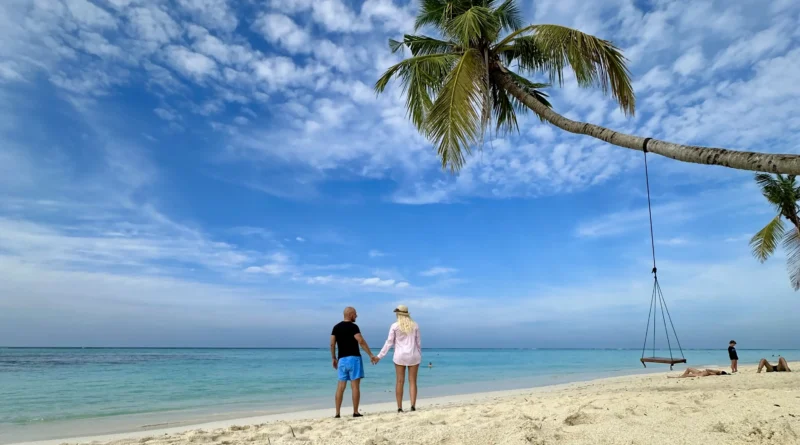
Maldives 2026: Local Islands Guide (No Resorts)
Maldives 2026: Complete Local Islands Guide (No Resorts) + Essential Tips
Planning a trip to the Maldives in 2026, but don’t feel like paying for an all-inclusive resort? This Maldives local islands guide shows you exactly how to experience turquoise water, white-sand beaches and island life – while staying on local islands instead of luxury resorts.
You’ll find practical information based on real experience: currency and payments, ferries and speedboats, SIM cards, what to wear on local islands, alcohol rules, prices and which islands to choose first.

Why choose Maldives local islands in 2026?
The Maldives is famous for overwater villas and five-star resorts, but local islands are where you’ll really feel the daily rhythm of island life. They are also much more budget-friendly than resorts, without sacrificing the dreamy views.
- Same turquoise water and white beaches as the resorts.
- Lower costs for accommodation, food and activities.
- Local cafés and guesthouses instead of big chains.
- Perfect if you enjoy a slower, more authentic style of travel.
If you love the idea of walking barefoot to a tiny café, chatting with locals and watching the sunset from a quiet bikini beach, the Maldives local islands are made for you.
Currency & payments in the Maldives
The official currency is the Maldivian Rufiyaa (MVR), but US dollars are widely accepted on local islands.
- You can pay in USD for most guesthouses, excursions and restaurants.
- Cards are accepted in many places, but some shops add a 3–5% card fee.
- Euros are usually converted with a bad exchange rate, so they are not recommended.
Practical tip: bring a mix of small USD bills (1, 5, 10, 20) and use ATMs only if you really need local currency. Keep some cash for small supermarkets and street food.
Internet & SIM cards in the Maldives
If you work remotely, post on Instagram or simply hate slow Wi-Fi, a local SIM card is the best option.
- Common data packs: around 20 GB ~ 40 USD and 100 GB ~ 50 USD.
- Recommended provider: Ooredoo (good coverage on popular local islands).
- You can buy the SIM at the airport or in shops on the islands.
Most guesthouses offer Wi-Fi, but speed can vary a lot. A local SIM gives you stable internet everywhere – on the beach, on the ferry or at your favourite café.

Electricity & plugs: don’t forget a UK adapter
On Maldivian local islands, most power sockets use the Type G (UK-style) plug.
- Pack at least one or two UK adapters for your devices.
- Some guesthouses lend adapters, but it’s not guaranteed.
- Power cuts can happen occasionally, so it’s useful to bring a small power bank.
Entry requirements & IMUGA form (2026)
For many nationalities, the Maldives offers visa-free entry on arrival. However, you must complete the official immigration form called IMUGA both when you arrive and when you leave.
- Fill in the form online here: https://travel.immigration.gov.mv/
- Submit it within the time window specified on the website (usually 24–96 hours before travel).
- Keep a screenshot or email confirmation ready at the airport.
The form takes just a few minutes and makes the arrival process much smoother.
Dress code on local islands (very different from resorts!)
On local islands, the Maldives follows Islamic customs. This means the dress code is more conservative than what you see on resort islands.
- Swimwear is allowed only on dedicated “bikini beaches”.
- In villages, wear a T-shirt and shorts or a skirt that covers your thighs.
- At cafés and shops, avoid walking in swimwear only.
For women, light dresses, T-shirts and linen trousers are perfect. For men, shorts and a T-shirt are totally fine. On resorts the rules are different, but on local islands it’s important to respect the local culture.
Alcohol on local islands
This often surprises first-time visitors: alcohol is not allowed on local islands.
- No alcohol in local restaurants or cafés.
- No alcohol in shops.
- You can’t legally bring your own bottle in your luggage.
If you want to enjoy a cocktail at sunset, you’ll need to book a day trip to a resort island or spend part of your holiday on a resort or liveaboard boat. On local islands, you’ll be drinking fresh juices, mocktails and coconut water instead.
Transport between islands: ferries & speedboats
There are three main ways to move around the Maldives:
- Public ferries – the cheapest option, but also the slowest and with limited schedules.
- Speedboats – the most popular choice for local islands near Malé.
- Domestic flights – useful for very remote atolls.
For islands like Gulhi and Thoddoo, travellers usually book a shared speedboat.
- Malé → Gulhi: around 30 USD per person, ~30 minutes.
- Malé → Thoddoo: around 40 USD per person, ~1 hour and 20 minutes.
Important: ask your guesthouse to book the speedboat for you a few days before arrival. Boats can get full, especially in high season.
Sun & UV index: SPF 50 is your best friend
The Maldivian sun is strong even when it’s cloudy. It’s very easy to burn on the first day.
- Use SPF 50 sunscreen and reapply every 2 hours.
- Wear a hat, sunglasses and, if possible, a light long-sleeved shirt.
- The UV index can reach 11–12, which is considered extreme.
If you have sensitive skin, consider swimming in a UV rashguard – it’s more comfortable than staying in the shade all day.
Mosquitoes in the Maldives
Are there mosquitoes in the Maldives? Yes – but not on every island.
- Islands with more vegetation (like Thoddoo) can have quite a lot of mosquitoes.
- Smaller, sandier islands (like Gulhi) usually have fewer.
Pack:
- A good mosquito spray from home.
- After-bite gel in case you react strongly.
If you choose your island well and avoid areas with dense vegetation at dusk, mosquitoes should be manageable.
Which local islands to choose first?
Thoddoo – lush and tropical
Perfect for: couples, beach lovers, travellers who enjoy a quiet atmosphere and long walks.
- Huge, beautiful bikini beaches.
- Fields of papaya and watermelons – fruit lovers will be happy.
- More vegetation and, as a result, more mosquitoes – bring spray.
Gulhi – small island, big beach
Perfect for: short trips, first-time visitors, combining with another island.
- Very close to Malé, easy to reach by speedboat.
- Beautiful bikini beach with clear water and soft sand.
- Relaxed atmosphere and a handful of cafés and guesthouses.
Maafushi – lively and social
Perfect for: solo travellers and anyone who wants more restaurants and excursions.
- Many cafés, souvenir shops and tour operators.
- Good base for day trips to sandbanks and snorkelling spots.
- More tourists than on other local islands – expect a busier vibe.
Sample Maldives local islands budget
Costs can vary, but this is a rough idea for 2026 prices on local islands (per person per day):
- Guesthouse: 40–80 USD (double room, breakfast included).
- Food: 15–30 USD depending on where you eat.
- Transport (averaged): 5–10 USD per day.
- Activities / excursions: 20–60 USD when you join a tour.
Overall, a comfortable daily budget is around 80–120 USD per person on local islands – much less than typical resort prices.
FAQ — Maldives local islands in 2026
- Is it safe to stay on local islands?
Yes, local islands in the Maldives are generally very safe. People are friendly and used to hosting tourists. Just use normal common sense with valuables. - Can I wear a bikini everywhere?
No. You can wear a bikini only on designated bikini beaches. In villages and public areas you should dress modestly. - Can I drink alcohol on local islands?
No. Alcohol is not sold or served on local islands. For drinks, you’ll need to visit a resort island or a liveaboard boat. - How many days do I need for a Maldives local islands trip?
A good first trip is 7–10 days: 2–3 nights on one island, 4–5 nights on another, plus a night near Malé for flight connections. - When is the best time to visit the Maldives?
The most popular months are December to April, during the dry season. Outside of that window you may get more rain, but also better prices.
Keep planning your next trips
Save this Maldives local islands guide and explore more travel inspiration for your next holidays:
- Where to Travel This Winter (2026): Warm & Exotic Escapes
- Cyprus in Winter 2026 – What to See, Weather & Things to Do
- Relaxed 3-Day Barcelona Itinerary
- Rome 3-Day Itinerary – Slow & Authentic
If you’ve already visited the Maldives, feel free to share your experience in the comments – it helps other travellers plan their dream island escape.


